The Stone of Virtue, Balance & Enduring Beauty

ORIGINS & ANCIENT USE
A Stone Revered for Thousands of Years
Jade has been worked by human societies since prehistoric times, appearing in tools, ornaments, ritual objects, and ceremonial carvings.
In China, jade became particularly important as a material associated with heaven, virtue, status, and ritual life. Traditional jade objects such as the bi — a round disc with a central opening — carried symbolic associations with heaven.
The cultural importance of jade extended far beyond decoration. It became a material through which ideas of character, harmony, and the relationship between humanity and the natural world could be expressed.
A Material of Virtue: Confucian tradition famously associated jade with moral qualities and personal virtue.
A Material of Ritual: Jade was shaped into ceremonial objects, ornaments, and symbolic forms used across generations.

A STONE DEEPLY ROOTED IN JAPANESE HISTORY
Jade in Japan
Japan has its own ancient history with jade, particularly jadeite from the Itoigawa region of Niigata.
From the Jōmon period through the Kofun period, Japanese jadeite was fashioned into ornaments and ritual objects, including the famous magatama — curved, comma-shaped beads that became important objects of ancient Japanese culture.
Itoigawa jadeite is especially significant because it represents one of Japan's oldest and most distinctive traditions of jade working.
The stone was not simply valued for its appearance. Its rarity, durability, and unusual natural beauty gave it a place among objects associated with ceremony, identity, and spiritual significance.

A MATERIAL CONNECTING NATURE, CULTURE, AND SYMBOLISM
Cultural & Symbolic Significance
In East Asia
Jade has traditionally been associated with qualities that go beyond physical beauty:
- Virtue — representing integrity and moral character
- Harmony — associated with balance and composure
- Protection — historically worn and carried as a meaningful personal object
- Longevity — valued for its remarkable toughness and endurance
- Connection with nature — admired for its natural color, texture, and variation
In Chinese tradition, jade became deeply connected with ideas of virtue and heaven. In Japan, jadeite became part of an ancient culture of ornaments and ritual objects, most famously represented by the magatama.
Its meaning has therefore never been limited to decoration.
Jade has been valued as a material that carries meaning through generations.

NOT JUST BEAUTIFUL — BUILT TO ENDURE
Why You Love Jade
You may be drawn to jade because of its distinctive combination of beauty and substance.
- A naturally rich color
From deep green to pale green, white, lavender, yellow, and other natural shades, jade displays remarkable variation. - A smooth, tactile character
Fine jade has a distinctive texture that invites touch and develops a beautiful presence when polished. - Exceptional toughness
Jade is unusually resistant to breaking and chipping, making it especially well suited to beads, carvings, and objects intended to last. - A history of meaning
For thousands of years, jade has been associated with virtue, harmony, ritual, and personal significance. - Beauty that does not depend on brilliance
Rather than relying on sparkle, jade draws attention through depth, texture, and quiet color.
This combination of strength, subtle beauty, and cultural meaning is what has kept jade valued across generations.

A MATERIAL THAT CARRIES MEANING
Beyond Color: The Meaning of Jade
Jade represents qualities that continue to resonate today:
- Strength without excess
- Beauty without ostentation
- Balance over extremes
- Meaning over ornament
Its appeal lies partly in its restraint.
Jade does not need to sparkle to command attention. Its beauty comes from color, texture, weight, and presence — qualities that become more apparent the longer you live with it.
For this reason, jade has remained a natural choice for objects meant to be worn, held, kept, and passed down.

FROM ANCIENT OBJECTS TO MODERN LIFE
Jade Today
Today, jade continues to be used in jewelry, beads, carvings, and personal objects that combine natural beauty with cultural meaning.
For a modern wearer, jade can be appreciated simply as a beautiful natural material — while also carrying the deeper history of the cultures that have valued it for thousands of years.
Its enduring appeal is not based on fashion.
It is based on continuity:
a stone shaped by nature, refined by human hands, and carried forward through generations.
-
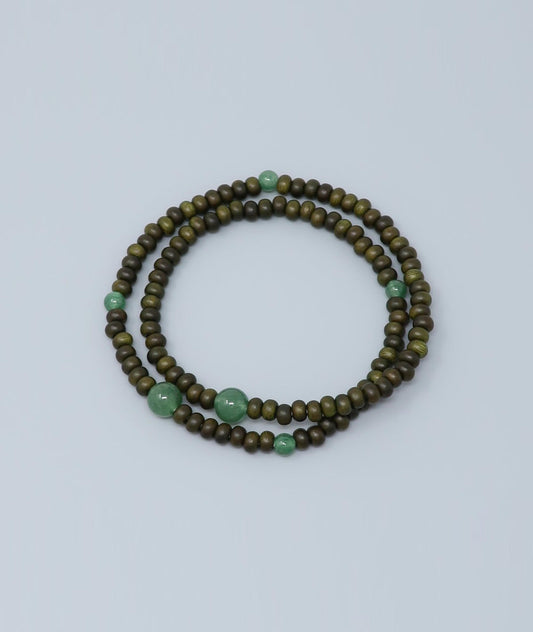
108 Lignum Vitae Life Tree Juzu Bead Bracelet with Jade Accents
Regular price $75.00 USDRegular price -
Sandalwood Juzu Bead Bracelet Engraved Heart Sutra with Jade Accent
Regular price $110.00 USDRegular price -
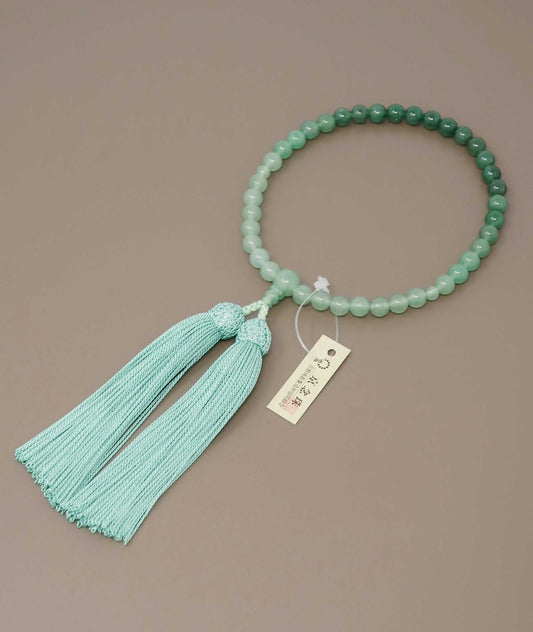
Indian Jade Juzu Prayer Bead with Premium Silk Tassel
Regular price $165.00 USDRegular price