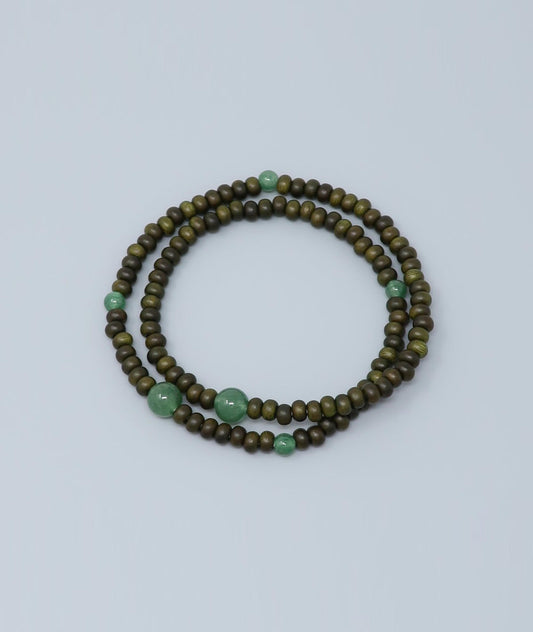
The Sacred Wood of Serenity

Origins & Ancient Use
A Material Steeped in Spiritual History
Sandalwood’s use dates back at least4,000 years, with early civilizations in India, China, and Japan valuing it for ceremony, healing, and meditation. In Japan, sandalwood — known asByakudan— was introduced alongside Buddhism and quickly became essential in religious life, especially for incense and sacred objects.
Buddhist Rituals: Used in incense and carved into prayer beads (juzu), statues, and meditation tools — its fragrance is believed to encourage mindfulness, focus, and inner peace.
Kōdō (The Way of Incense): Japanese cultural practice where sandalwood figures prominently as a noble fragrance that refines the spirit and sharpens the senses.

A material shaped by prayer, ritual, and quiet devotion.
Sandalwood in Japanese Culture
In Japan, sandalwood — known as Byakudan — was introduced alongside Buddhism and became deeply rooted in religious and cultural life.
It has long been used for:
- Buddhist statues
- Prayer beads (Juzu)
- Incense and ritual tools
Rather than being treated as a luxury material, sandalwood in Japan is regarded as a spiritual companion — a material that supports prayer, reflection, and calm presence.
Its role is subtle but essential:
not to dominate the senses, but to quiet the mind.

A premium material with authentic roots
Cultural & Symbolic Significance
In Japan
- Across the Heian period (794–1185) and later eras, sandalwood was incorporated not just in religious settings, but socially, such as in sensory games and cultural refinement activities based around incense appreciation.
- Its aroma is associated with purification, tranquility, and spiritual presence — qualities deeply valued in Buddhist, Shinto, and traditional Japanese practices.

Not always consciously — but deeply.
Why You Love Sandalwood
You may feel drawn to sandalwood without fully knowing why. For generations, people have valued it for qualities that are quiet, yet enduring:
- A gentle, unobtrusive fragrance
It soothes the mind without overwhelming the senses. - A sense of stillness
Supporting moments of meditation, prayer, and reflection. - A grounding presence
Bringing balance, warmth, and emotional ease. - Unspoken spiritual meaning
Long associated with purification and protection. - Beauty that deepens with time
Its fragrance matures as the wood ages, softening rather than fading.
This quiet consistency is why sandalwood has remained close to people’s lives.

A material that reflects how we wish to live
Beyond Fragrance: The Meaning of Sandalwood
Sandalwood represents values that resonate strongly today:
- Slowness in a fast world
- Simplicity over excess
- Presence over distraction
In Japanese aesthetics, these qualities align closely with ideas such as seijaku (静寂, quietness) and kansha (感謝, gratitude).
This is why sandalwood remains essential not only in temples, but also in personal objects meant for daily reflection and protection.

Tradition carried gently into modern life
Sandalwood Today
Even in modern life, sandalwood continues to be chosen for items intended to:
- Accompany meditation or prayer
- Create a calm, grounded atmosphere
- Serve as meaningful personal objects rather than ornaments
Its value lies not in trend or novelty, but in continuity — a material that gently connects past and present.
-
Sandalwood Juzu Bead Bracelet Hand-Engraved Heart Sutra with Tiger’s Eye Accent
Regular price $110.00 USDRegular price -
108 Lignum Vitae Life Tree Juzu Bead Bracelet with Jade Accents
Regular price $75.00 USDRegular price -
108 Lignum Vitae Tree of Life Juzu Bead Bracelet with Rose Quartz
Regular price $95.00 USDRegular price -
Sandalwood Juzu Bead Bracelet Hand-Engraved Heart Sutra with Jade Accent
Regular price $110.00 USDRegular price -
Sendan Juzu Bead Bracelet 6mm
Regular price $42.00 USDRegular price -
Seven-Color Amulet Green Sandalwood Tree of Life Juzu Bead Bracelet for Good Luck
Regular price $90.00 USDRegular price -
Sandalwood Juzu Bead Bracelet with Hand Carved Seven Lucky Gods
Regular price $90.00 USDRegular price -
Sandalwood Juzu Bead Bracelet Hand-Engraved Heart Sutra with Agate Accent
Regular price $110.00 USDRegular price -
108 Lignum Vitae Tree of Life Juzu Bead Bracelet with Amethyst
Regular price $170.00 USDRegular price -
Sandalwood Juzu Bead Bracelet Hand-Engraved Heart Sutra with Clear Quartz Accent
Regular price $110.00 USDRegular price